
Lightweight construction
and additive manufacturing
We are your partner for weight reduction and material-saving optimization of existing structures and components, as well as the development of new lightweight components. We support you every step of the way—from concept development through product design, structural design, and engineering all the way to production readiness. We also advise you on the optimal use of materials—from metal to compostable composites.
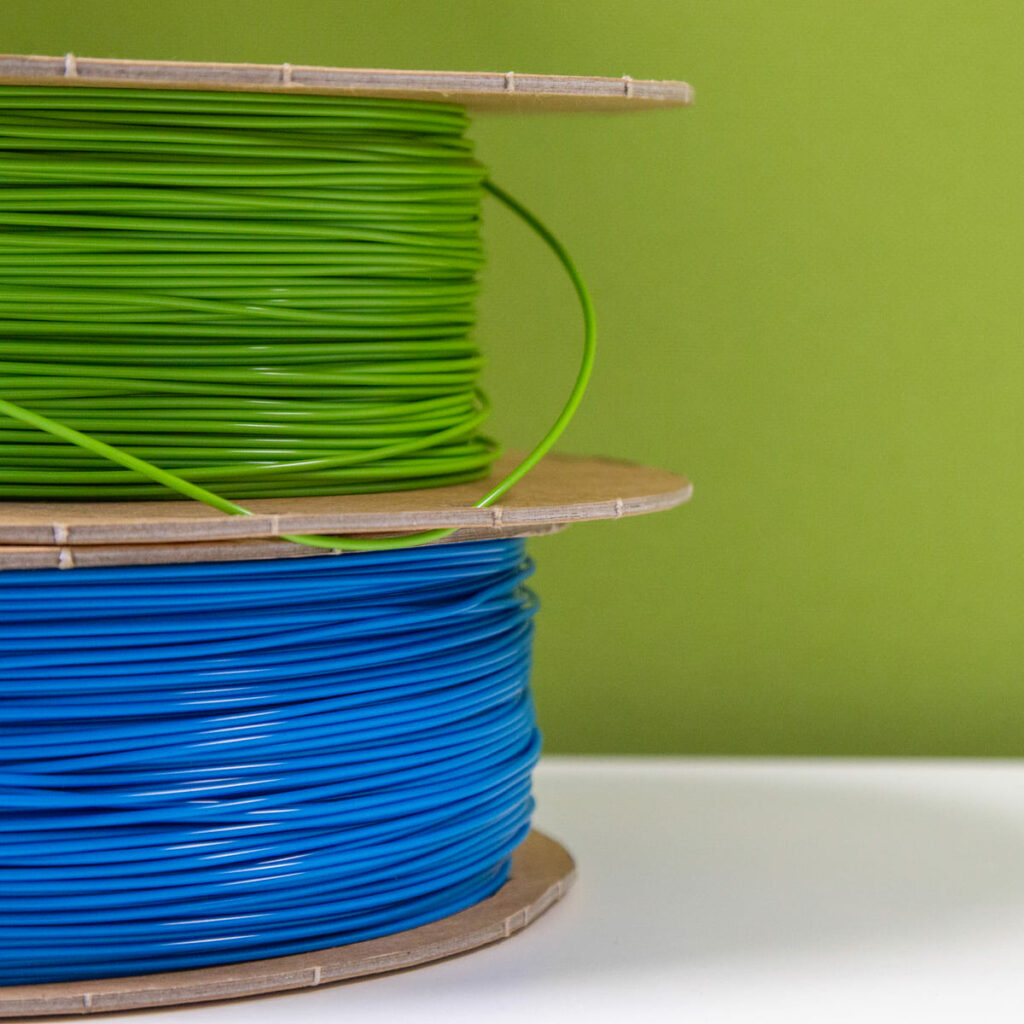
New materials for lightweight structures
Lightweight yet sturdy materials that are as recyclable as possible—this is currently the focus of a great deal of research. Composite materials such as carbon fiber-reinforced plastics (CFRP) and fiberglass-reinforced plastics (FRP) offer high strength combined with low weight. In addition to stability, we place a strong emphasis on sustainability: We partner with manufacturers who develop lightweight materials using, for example, waste materials from the textile industry.
We find this just as exciting hybrid material combinations made of metals, plastics, or other materials. These can be used for specific applications, such as improved thermal conductivity. Smart and in line with Industry 4.0: Embedded Sensors in lightweight components can monitor the condition and performance of components in real time.
Conserving Resources: Sustainability and the Circular Economy
When is lightweight construction sustainable?
New materials that can be easily recycled or reintegrated into biological cycles, while offering high functionality, safety, and durability: Lightweight components offer a great way to enhance the efficiency, performance, and sustainability of machines, vehicles, and products. To ensure sustainability in the overall assessment, we take the following factors into account:
When we conserve energy and resources:
A reduction in the total weight of machines and components leads to lower energy consumption during operation, particularly in vehicles, aircraft, and other modes of transportation. Less weight also means lower resource consumption during manufacturing and a reduced environmental impact.
When we use resource-efficient and recyclable materials:
We use materials derived from renewable resources or recycled sources that are as easily recyclable as possible. These include bio-based plastics, recycled carbon fiber, composite materials reinforced with natural fibers (such as flax, hemp, or bamboo), or with textile fibers that are leftover from the textile industry. This reduces the amount of waste that ends up in landfills and decreases the need for new raw materials.
When we enable durability and repairability:
Wir achten darauf, unsere Produkte und Bauteile so zu konstruieren, dass sie langlebig sind und bei Bedarf leicht repariert werden können. Dadurch wird die Lebensdauer des Produkts verlängert und die Notwendigkeit für Ersatzteile oder Neukäufe reduziert.
When we consider the entire system:
Sustainability takes into account not only the reduced weight resulting from material savings in individual components, but also the impact on the entire system. This involves considering life-cycle costs, energy consumption, environmental impact, and social impacts throughout the product’s entire lifespan—in accordance with the principles of the circular economy.
Step by step toward lightweight construction with ARNIO:
Step 1
Optimization of existing material classes and processes
- Resource efficiency: Reducing material and energy consumption by optimizing the design to improve material utilization while keeping the process chain as consistent as possible
- Use of materials of the same class with a higher recycled content or more sustainable production conditions
Step 2
Use of sustainable materials and optimized manufacturing
- Use of environmentally friendly materials, whether derived from renewable resources, biodegradable, recyclable, or having a low environmental footprint
- Use of a sustainable production process under Einsatz energieeffizienter Maschinen und Prozesse
Step 3
Product development in line with the principles of the circular economy
- Reducing waste and emissions
- Use of biodegradable or recyclable materials.
- Reuse, recycling, and upcycling of materials
- Using digital technologies to improve efficiency and conserve resources.
Our Network Partners